
Experts Warn of Lingering Pest-Borne Health Risks This Fall and Winter
The National Pest Management Association identifies top U.S. cities, along with additional hot spots, where fluctuating temperatures, rainfall and seasonal pest activity could keep residents on alert.
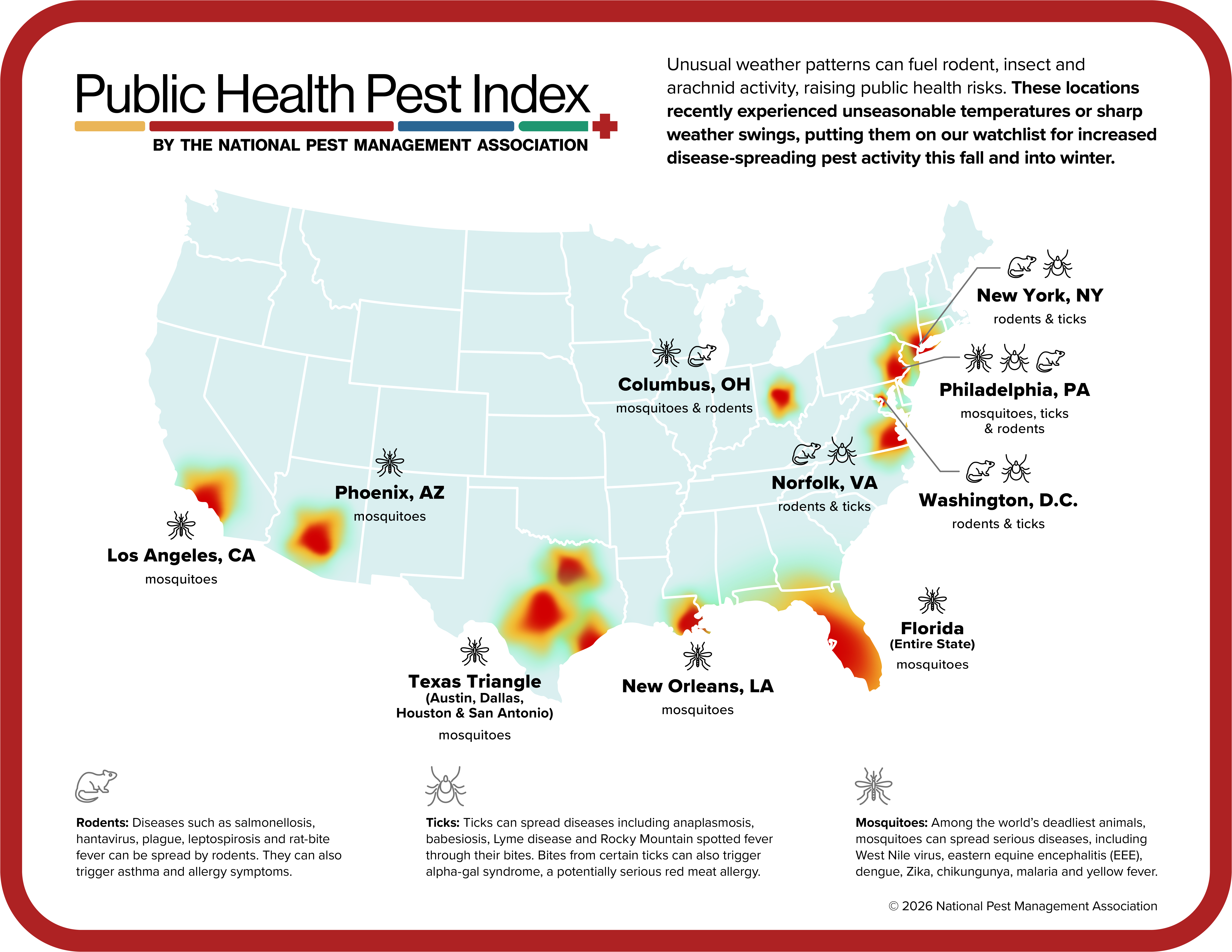
FAIRFAX, Va. (Nov. 18, 2026) — Today, the National Pest Management Association (NPMA) released its fall and winter Public Health Pest Index, a biannual forecast identifying U.S. cities at heightened risk for disease-spreading pest activity. This season’s index also names Florida and Texas as special watchouts, with several cities in each state showing high pest potential.
“Pest-borne health risks don’t disappear when the weather turns cooler,” explained Dr. Jorge Parada, medical advisor for NPMA with a focus on infectious disease. “As long as they have the right conditions to survive, mosquitoes can transmit dengue and West Nile virus, the most widespread insect-borne infection in the United States. Ticks can spread Lyme disease, the most frequent tick-borne infection in the country, and rodents can contaminate food and spread diseases such as hantavirus. Staying vigilant through the fall and winter months is one of the best ways to protect your health.”
“This season’s report comes as heavy rainfall and flooding across the Southwest can create new mosquito breeding sites, while mild weather keeps other disease-carrying pests active nationwide,” said Dr. Jim Fredericks, senior vice president of public affairs at NPMA. “The most effective prevention starts before pests become a problem. Emptying water from outdoor containers, sealing gaps around your home and working with a qualified pest control professional are practical steps residents should take now.”
The top U.S. cities* named to NPMA’s Public Health Pest Index are:
-
Los Angeles: Mosquito season may stretch beyond its usual window if mild temperatures persist. West Nile virus is already a concern in the region, so residents should continue taking precautions.
-
New Orleans: An extended mosquito season is possible, as forecasted warm temperatures and heavy rainfall could create additional breeding opportunities.
-
New York: A milder fall and winter could allow ticks to continue seeking hosts, making tick checks important after spending time outdoors. City dwellers may also encounter more rodents moving into buildings as temperatures cool.
-
Norfolk, Virginia: Both ticks and rodents could remain active later into the season if temperatures stay mild and rainfall increases as predicted.
-
Philadelphia: Mild weather may keep mosquitoes and ticks active outdoors for longer. Once temperatures cool, residents could then face rodents moving indoors.
-
Phoenix: Above-average rainfall and temperatures could create mosquito breeding sites wherever water collects. West Nile virus is already a concern in Arizona, so residents should keep removing standing water to protect themselves against bites.
-
Washington, D.C.: Tick and rodent activity could linger into winter thanks to forecasted mild temperatures and above-average precipitation.
Statewide Alerts:
-
Florida: Mosquito activity may persist as conditions remain favorable. The state has reported one of its largest dengue outbreaks, so residents should continue protecting against mosquito bites by eliminating standing water around their homes.
- Texas Triangle (Austin, Dallas, Houston and San Antonio): Residents may notice mosquitoes sticking around longer than expected, as temperatures above seasonal norms could support continued activity into winter.
*Not listed in numeric ranking
To help families prevent pest problems this fall and winter, NPMA recommends sealing cracks around foundations and utility pipes, installing door sweeps and storing food in airtight containers to deter pests seeking shelter indoors. Outside, clear clogged gutters, eliminate standing water and remove leaf piles near the home to reduce mosquito breeding sites and tick hiding places. In areas where mild weather keeps mosquitoes and ticks active, continue using EPA-registered insect repellent as directed and checking for ticks after spending time outdoors.
If you suspect a pest infestation, always contact a qualified pest control professional to properly identify and address the issue. For more information on pests and the risks they pose, visit PestWorld.org.

Learn About Rodents
Rodents invade millions of homes each winter. Learn more about them!

NPMA’s Bugs Without Borders
NPMA’s Bugs Without Borders research uncovers surprising shifts in America’s pest landscape and what homeowners should expect next.

NPMA's Bug Barometer Forecast
The latest Bug Barometer® forecast from the National Pest Management Association reveals what homeowners across America can expect from pest activity this fall and winter.

Learn About Rodents
Rodents invade millions of homes each winter. Learn more about them!
NPMA’s Bugs Without Borders
NPMA’s Bugs Without Borders research uncovers surprising shifts in America’s pest landscape and what homeowners should expect next.
NPMA's Bug Barometer Forecast
The latest Bug Barometer® forecast from the National Pest Management Association reveals what homeowners across America can expect from pest activity this fall and winter.