
Bugs Without Borders: What Every Homeowner Needs to Know About the Pests Invading American Homes
A Consumer Guide from the National Pest Management Association
Your home is your biggest investment. But right now, pests across America are threatening properties, health, and peace of mind in ways that might surprise you. The National Pest Management Association (NPMA), working with the University of Florida, surveyed 375 pest control professionals nationwide to understand what's really happening in homes like yours. What they found should grab your attention — and might just save you thousands of dollars in damage.
The Bed Bug Reality: Why They're Harder to Beat Than You Think
Here's something that might surprise you: When homeowners call pest control professionals thinking they have bed bugs, it is often something else entirely. In fact, 90% of pest control professionals report that this happens often. Carpet beetles (60%), flies (48%), and cockroaches (32%) are the usual culprits behind these false alarms. But here's the kicker —when it actually is bed bugs, you're facing the toughest pest to eliminate.

The Numbers Don't Lie
While bed bugs only rank seventh in how often pest pros are called to treat them, 24% of professionals say they're the single hardest pest to control — nearly twice as challenging as German cockroaches (13%) and rodents (12%). 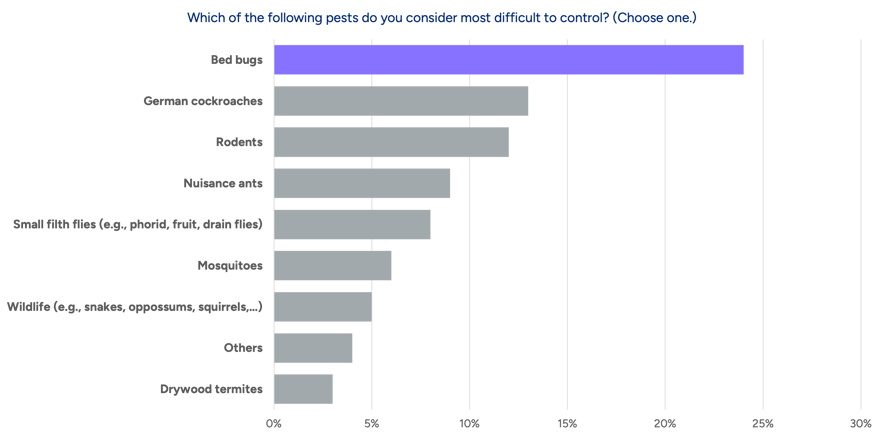
They're Not Just in Your Bedroom
Think bed bugs only live in mattresses? Think again. Pest professionals have found them in places you'd never expect:
-
Vehicles: Cars, ambulances, buses, boats, RVs, feed mill trucks, and big rig sleeper cabs
-
Public spaces: Hospital ORs, courtrooms, army bases, church sound booths, DMV waiting areas, movie theaters, libraries, gyms, summer cabins, storage units, and more
-
Electronics: Cell phones, radios, TVs, game consoles, electrical outlets, and an MRI scanner
-
Furniture: Wheelchairs, cabinets, TV stands, a rocking horse tail, and cat towers
The takeaway? These hitchhikers spread fast, and they hide everywhere. The primary bedroom is still ground zero (94% of infestations), but living rooms, kids' bedrooms, and guest rooms are all fair game.
Because bed bugs are commonly misidentified, trying to diagnose and treat them yourself means you're likely wasting money on the wrong problem or making the real problem worse while it spreads.
Rodents: America's Most Frequent Pest Control Call
96% of pest control companies were called to treat rodents last year. That's more than any other pest, accounting for 14.6% of all pest control calls received.
When People Finally Call for Help
Most homeowners wait too long. Here's when they typically reach out:
-
28%: After hearing scratching in walls or ceilings
-
27%: After seeing droppings or chewed materials
-
22%: After spotting live rodents or nests
-
12%: When the infestation is severe and widespread
-
Only 11%: As a preventative measure
The problem? By the time you hear scratching or see droppings, you already have a serious problem. Rodents multiply fast, contaminate food, spread disease, and chew through wiring, creating fire hazards.
Termites: The Silent Home Wrecker
While 79% of pest control companies offer termite services, the real danger is what you can't see. Termite damage often stays hidden until it's extensive and most homeowners insurance won't cover it.
The Warning Signs
Homeowners usually call professionals after noticing:
-
34%: Physical signs like mud tubes, damaged wood, or frass
-
33%: Termite swarmers or discarded wings
-
23%: As a preventative measure
-
10%: When damage is already extensive
Here's the alarming part: Pest professionals regularly encounter hidden, extensive damage that homeowners had no idea existed. Your home could be losing structural integrity right now, and you wouldn't know it.
Invasive Species: The Growing Threat You Haven't Heard Enough About
42% of pest management professionals say invasive species problems have increased over the past year. These non-native pests don't have natural predators here, so they multiply faster and cause more damage than native species.
The Top Invaders
-
Red imported fire ants (45% of professionals treated them): Painful stings, massive colonies, and aggressive behavior
-
Brown marmorated stink bugs (43%): Invade homes in huge numbers during cooler months and are most well known for their foul odor
-
Argentine ants (43%): Form extremely large colonies that disrupt ecosystems and become major nuisances
These aren't just outdoor problems. They're getting inside homes, damaging landscaping and native plants, and in some cases, posing health risks. 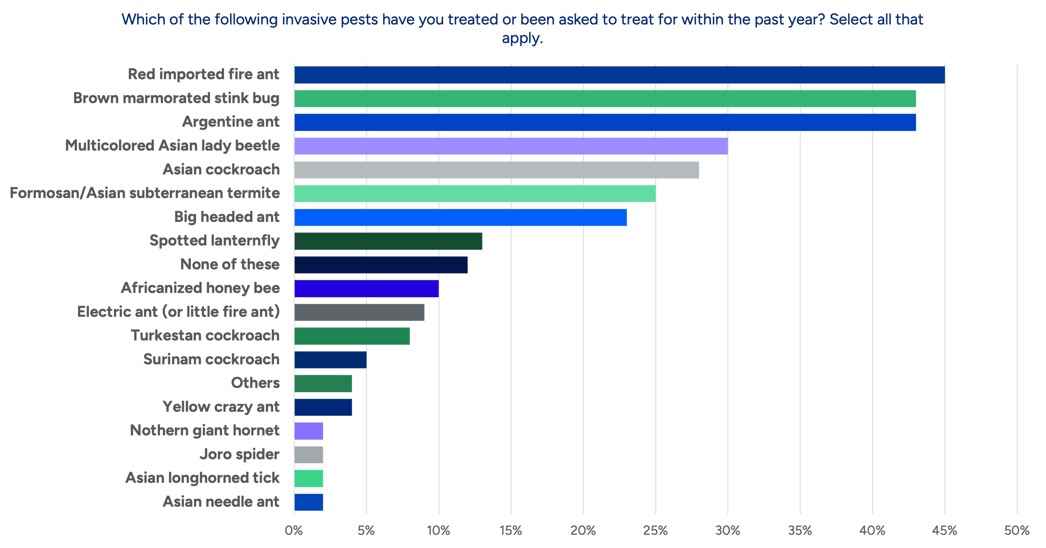
What Pest Pros Want You to Know (And Why DIY Won't Cut It)
When asked what homeowners should prioritize to help keep pests out, pest management professionals were clear:
Top 3 Prevention Steps
-
Seal entry points (64%): Close gaps around foundations, windows, doors, and utility pipes
-
Reduce clutter (52%): Pests need hiding spots — don't give them any
-
Invest in preventive professional pest control (37%): Stopping problems before they start saves money and stress
Discover more tips to prevent these pests here.
Why Professional Help Matters
-
Accurate identification: Professionals use visual inspections, specialized tools, and years of training to correctly identify pests
-
Effective treatment: The right pest requires the right solution — guessing wrong means wasted money and ongoing problems
-
Long-term monitoring: Pest control isn't one-and-done; it requires ongoing attention to keep your home protected
The reality: DIY treatments often fail because homeowners misidentify the pest, use the wrong products, or miss hidden infestation sites. By the time you realize it didn't work, the problem has gotten worse and more expensive to fix.
The Bottom Line: Don't Wait Until It's Too Late
Pest problems don't get better on their own. Whether it's bed bugs spreading through your home, rodents multiplying in your walls, termites eating away at your critical support beams, or invasive species taking over your yard, waiting costs you more in the long run.
Take Action Now
-
Don't guess: If you see signs of pests, call a qualified professional pest control company for proper identification
-
Don't delay: The sooner you address a pest problem, the easier, less expensive, and less time-intensive it is to solve
-
Don't go it alone: Professional pest management combines your prevention efforts with expert treatment and monitoring
Your home deserves protection from trained professionals who know what they're doing. The Bugs Without Borders survey makes one thing crystal clear: pest problems are complex, they're evolving, and they require expertise to handle effectively.
Discover licensed pest control professionals in your area, and protect your home and family before small problems become big disasters.
About This Survey
The Bugs Without Borders survey gathered insights from 375 pest management professionals across the United States. Conducted in spring 2025 by the National Pest Management Association in collaboration with the University of Florida, this survey builds on previous iterations from 2010, 2011, 2013, 2015, and 2018 to track how pest threats are changing over time.
About the National Pest Management Association
The NPMA, a non-profit organization with more than 4,000 members, was established in 1933 to support the pest management industry's commitment to the protection of public health, food and property from the diseases and dangers of pests. For more information, visit PestWorld.org or follow @PestWorld on Facebook, X, TikTok, and YouTube, and @PestWorldOfficial on Instagram.